
Normal banking operations like cheque clearance in public sector banks across the country are likely to be hit on Wednesday as employees have decided to go on one-day nation-wide strike to press for wage revision.


The United Forum of Bank Unions would be holding a one-day all-India strike on January 7 followed by a four-day strike from January 21-24.

The overall debt servicing metrics of Indian corporates are weak.

Norms governing investments by provident funds bar these from depositing funds in a commercial bank in case the NPAs of that bank exceed two per cent of net advances.

Food inflation in April stood at 6.08 per cent, while the overall WPI inflation fell to a three-year low of 4.89 per cent.

'Valuations of midcaps and smallcaps have reached very high levels, and hence to that extent leave little margin of safety.'

'Who has given how much money to which party, the people of India must know this fact.'

Delays in returning money for disputed transactions have also come under RBI's scanner.

The scheme calls for banks, refineries and hallmarking centres to work together.

The bank chiefs have also cancelled the customary media conference after the bi-annual policies.

Banking secot to see major changes by 2020.

The war between hackers and banks over ATM security will be dynamically redefined, notes Atanu Biswas.

The Indian economy has recovered 'handsomely' from the pandemic-induced disruptions, former Niti Aayog vice chairman Arvind Panagariya said on Tuesday, while expressing hope that the recovery will be sustained and the growth rate of 7 to 8 per cent will be restored. Panagariya suggested that the government must now signal its intention to wind down fiscal deficit by cutting it by half-to-one percentage point in 2022-23. "The Indian economy has recovered handsomely, returning to its pre-COVID GDP... "Only private consumption is still below its pre-COVID-19 level," the eminent economist told PTI in an interview.

Capital adequacy and tighter regulation are just one step forward.

Of the 700-odd Indians having foreign bank accounts, not all can be deemed to be operating these illegally.

Taxpayers are filing their income tax returns (ITRs) early for the Assessment Year 2024-25 (FY25). By April 29, over 592,000 returns were filed, with over 538,000 verified and 367,000 processed. Early filing allows revisions without penalties.

The payments industry is at a crossroads with the banking regulator on two pressing issues, neither of which seems headed towards an amicable solution. Depending upon which side accommodates the other, customers in India will have to choose between convenience and ironclad safety. In the end, the Reserve Bank of India (RBI), which regulates both banks and all payments services providers, will prevail. But the question is: will it do so by bending a little or by sticking to its firm stand? The two issues - one concerning payment facilitators storing customers' card details and the other about auto-renewal of payments - appear similar but aren't.

Future Gaming of lottery king Santiago Martin was the biggest purchaser of electoral bonds at Rs 1,368 crore, of which nearly 37 percent went to the DMK.

Indian fintechs and associated entities are hoping that the Union Budget 2024 will provide a boost and empower firms to extend their reach beyond Tier-II regions, with an emphasis on supporting enterprises led by women. The fintech industry, which has witnessed regulatory reforms over the last year, expects the Budget, scheduled to be presented by Finance Minister Nirmala Sitharaman on February 1, will further encourage financial inclusion, empower micro-small-medium enterprises (MSMEs) with lending solutions, and push for upskilling initiatives for the country's young workforce.

For banks, the package will limit the burden of provisioning for stressed loans. Besides, the proposed restructuring package for MSMEs with a credit of up to Rs 25 crore is expected to provide a breather to units from this sector.

Bhupinder Singh Bajwa will be the chairman of the panel with hockey Olympian M M Somaya and former international shuttler Manjusha Kanwar being the other two members.
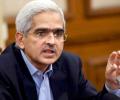
The increasing involvement of Big Tech in the financial system could give rise to concentration risk and there are potential spillovers, which call for closer attention, Reserve Bank of India (RBI) Governor Shaktikanta Das said on Tuesday. "...enormous amounts of consumer data is being generated and leveraged upon by a few entities (the so-called Big Tech) by virtue of their huge customer base. "Such developments raise concerns on concentration risk and potential spillovers as their level of engagement with the financial system strengthens in the years to come," Das said at the Global Fintech Fest 2022.

Municipal corporations penalise late property tax payments. 'Penalties can include attachment of properties, bank accounts, rent and other movable assets," says Anand Moorthy, co-founder, Square Yards.

The oil industry experienced three upheavals between 1973 and 1991, which seem to be etched in the memory of the industry's decision makers. Naturally, at the sign of a new crisis, the decision makers like to dip into those tumultuous decades to find ways to deal with the new shock, in addition, of course, to expert reports and forecasts. So, the industry bigwigs turned the pages of history to get a peek into the future of oil price movements after Russia invaded Ukraine in 2022, Israel attacked Gaza in 2023, Iran-linked Houthi rebels pounded tankers crossing the Red Sea in support of Palestine the same year, and Iran rained missiles on Israel in 2024.

Penalties for non-disclosure or inaccurate disclosure of these details can be severe.

'As long as economic growth remains steady, creating jobs and generating stable incomes, the rise in home loans should not create problems.' 'If the growth trajectory changes course over the medium term and interest rates rise along with inflation, the expanding trend in home loans may not sustain.'

PSB branches will work fulltime on the 1st and 3rd Saturday.

In a major relief to Indian information technology (IT) companies operating in Australia, Canberra has agreed to amend its domestic laws to stop taxing offshore income of such Indian companies, as part of the free trade deal inked. This may lead to savings up to $200 million each year for over 100 Indian IT companies operating in Australia. "The Government of Australia has agreed to amend the domestic taxation law to stop the taxation of offshore income of Indian firms providing technical services to Australia. "This will resolve the issue that the Indian government has raised about the double taxation avoidance agreement (DTAA) between the two governments for the avoidance of double taxation and the prevention of fiscal evasion with respect to taxes on income," said a commerce ministry official.

Exuding confidence in sustaining the tempo of credit growth, public sector bankers said on Wednesday that consolidation in the public sector bank (PSB) space has given them a robust base to scale. The privatisation of PSBs can be done through divestment of government stake to a wider base of investors without haste. There is nothing to worry about at this point (high credit offtake) as underwriting standards and risk management are much better.

Banks argued that loans of most lenders are funded primarily by retail deposits and not from the wholesale market as was the practice abroad

Without bringing sound governance and technical capabilities into the RBI's work, injecting new money sets the stage for a next wave of bad behaviour by banks, warns Ajay Shah.

Royal Challengers Bengaluru's IPL 2024 campaign is just one-match old, but it has already exposed their biggest chink. It's fragility in bowling, and they need better returns from bowlers against a confident Punjab Kings at an unforgiving M Chinnaswamy Stadium, in Bengaluru, on Monday.

Foreign Portfolio Investors' (FPIs) selling spree continues as they pulled out over Rs 3,400 crore from the Indian equity markets in the first three trading sessions of November on rising interest rates and geopolitical tensions in the Middle East. This came after such investors withdrew Rs 24,548 crore in October and Rs 14,767 crore in September, data with the depositories showed. Before the outflow, FPIs were incessantly buying Indian equities in the last six months from March to August and brought in Rs 1.74 lakh crore during the period.

It's a historical tie, we will benefit from India team's visit: Pakistan tennis fraternity

Foreign portfolio investors (FPIs) have pulled out Rs 17,696 crore from the Indian markets in December so far amid uncertainty due to a new coronavirus strain, Omicron, and expectations of faster tapering by the US Federal Reserve. According to the depositories data, FPIs took out Rs 13,470 crore from equities, Rs 4,066 crore from the debt segment and Rs 160 crore from hybrid instruments between December 1-17. In November, FPIs were net sellers to the tune of Rs 2,521 crore in Indian markets.

Marking a key milestone in the Indian government's fight against black money allegedly stashed abroad, India will get this month the complete information on flats, apartments and condominiums owned by Indians in Switzerland as also on earnings made from such properties to help it look into tax liabilities associated with those assets.

'Yes, the playing conditions still vary over time. But you're still in control of what sort of works for you on a pitch. So, you might play on a new hybrid pitch for one game.'

'They say 'a picture paints a thousand words', so seeing Rishi Sunak PM at the door of Number 10 can never be taken from us.'' 'It is a symbol that will go down in the history books.' 'It is the very embodiment of me saying to my boys, "You can be who you want to be",' notes James Salins in this must-read feature.

False and acrimonious debates such as Modi versus Manmohan might allow for victories that are political and partisan. But the real loser is the nation, India and Bharat, notes Arvind Subramanian, former chief economic advisor to the Modi government in its first term.
